In the wake of “Liberation Day” in the United States, we thought it appropriate to take stock of the current situation and, unfortunately, to recall some basic principles of investing. You know them well, but it’s always good to revisit them, especially in times of volatility, like the one we’re currently experiencing.
On April 2, 2025, the Trump administration announced a series of “reciprocal” tariffs of at least 10% on imports from more than 180 countries, including some territories without permanent populations or Antarctic islands inhabited by penguins (source).
The announcement had an immediate effect on global markets, as investors fear retaliatory measures that could lead to a global trade war.
Since his inauguration on January 20, the new American president has accustomed us to a daily cascade of executive orders and announcements, ranging from banning paper straws to changing the name of the Gulf of Mexico and a mountain in Alaska, to imposing tariffs of all kinds. It has also made a habit of going back on several of its own tariff announcements, using them more as negotiating levers than as concrete economic measures.
It is still too early to determine whether these reciprocal tariffs will be maintained in the long term, or whether some will eventually be cancelled. Although White House officials have claimed that they are non-negotiable, the president himself said on March 3 that they were finally open to negotiation. (source)
Investment outlook
From a wealth management perspective, we continue to take a long-term view, despite the recent volatility. We don’t think it’s a good idea to adjust portfolios in response to every announcement, as they are likely to change quickly and frequently. On the contrary, such adjustments could prove to be more harmful than beneficial, given the current unpredictability of the US administration.
As in past periods of volatility, we believe it is best to let the storm pass, considering that our portfolios are well diversified across different asset classes, management styles, geographies, and above all, aligned with your personal objectives defined in your financial plan*.
Don’t confuse indices with your portfolio
It is also important to keep in mind that the mediatized returns of stock market indices, which we see on the morning, noon and evening news, represent only the equity markets. This data does not reflect the returns of a well-diversified portfolio, which also includes bonds, structured products and alternative investments — such as the ones we are implementing. Such diversification makes it possible to considerably reduce the impact of the volatility relayed by the media.
An essential reminder: volatility is part of the journey
Periods of volatility and market declines are not pleasant for anyone, but they are an integral part of the investment process. They are the price to pay for access to attractive long-term returns. You just have to stay focused on your goals, be patient and keep your composure.
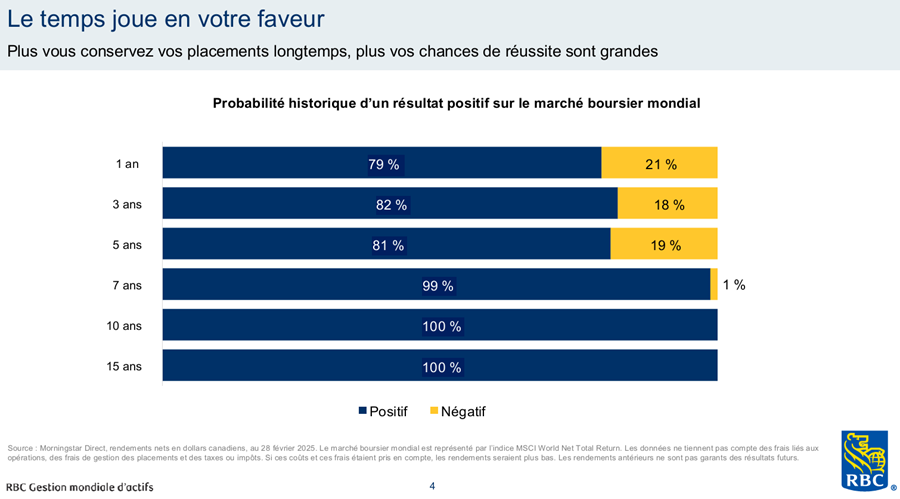
Recent history demonstrates this: think of the COVID-related drop in 2020 or the decline in inflation and interest rates in 2022. These periods have been followed by significant rebounds, demonstrating that staying invested is often the best strategy.
Some useful visual cues in times of volatility:
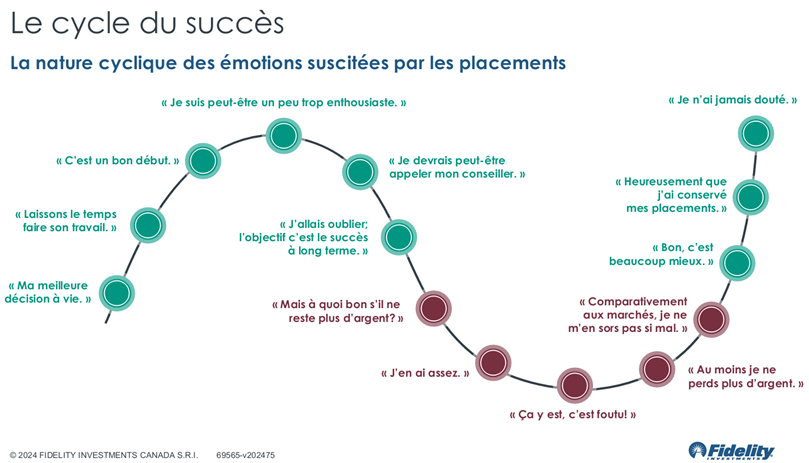
Investor Emotions Cycle:
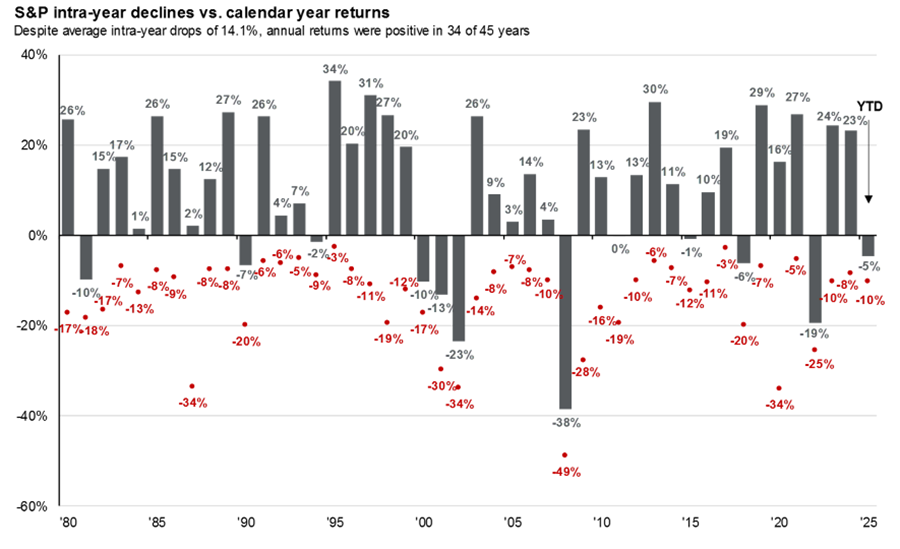
Since the 1980s, the U.S. stock market has experienced an average decline of 14% within a year, but annual returns have remained positive in 34 of the last 45 years.
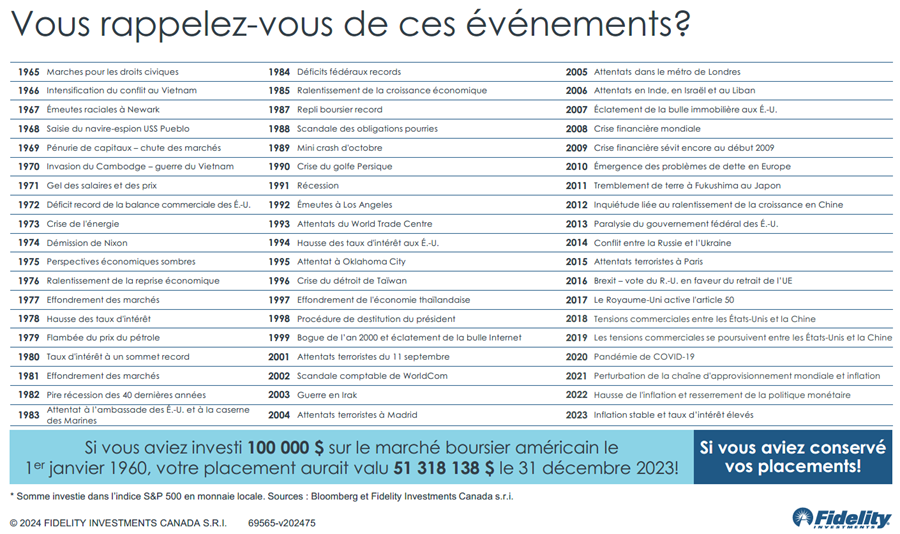
There will always be bad news. But in the long term, market performance always turns positive again.
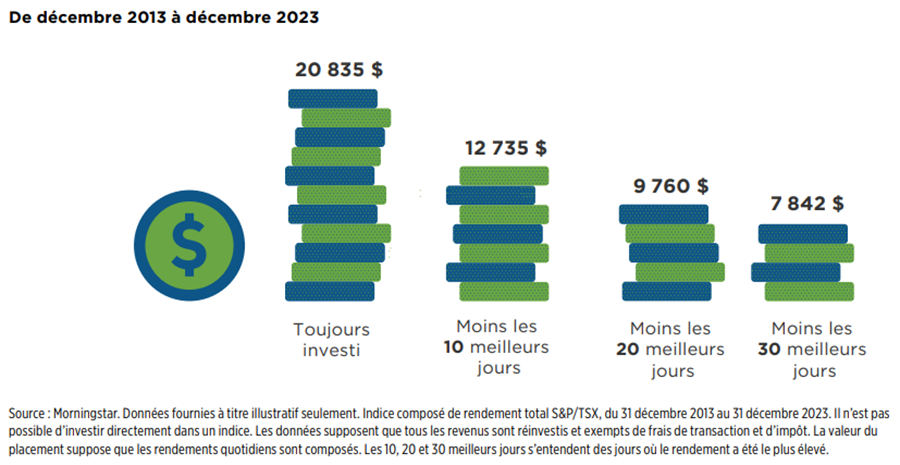
The importance of staying invested: Avoiding missing the best days on a private investment can make all the difference. Impact on a $10,000 investment over a 10-year period.